TerraNature
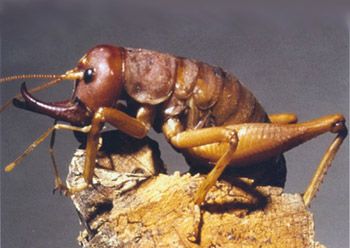
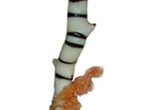
Tusked weta

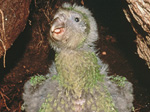
Help rare and odd flightless birds .....

Donate to Terra Nature Fund for Bank of New Zealand Kiwi Recovery Trust breeding programs for endangered Kiwi.....

..... and Threatened Species Trust critically endangered Kakapo and Takahe programs.

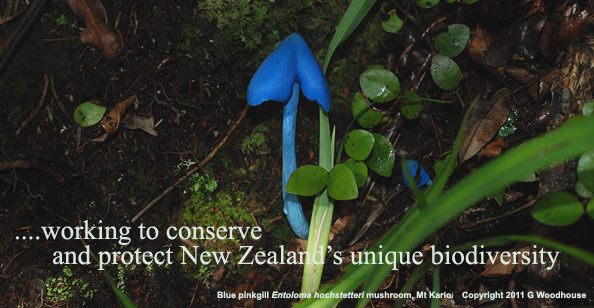
.............. working to conserve land and marine habitat, and protect New Zealand's biodiversity

What makes the 'edge ecology' internationally important ...............

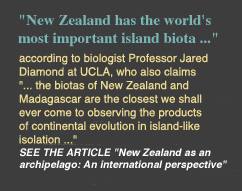
New Zealand was one of the very last places on Earth colonized by humans, with one of the worst biological losses. Very unique ecological events occurred during the archipelago's 80 million year isolation from the rest of the world, after being the first land mass to break away from the Gondwana super-continent.  As mammals developed in most places, New Zealand's exceptionally odd ecology evolved with three bats as the only land mammals.

With the world's most extensive collection of flightless birds, 80 percent endemism in plants, gigantism in insects (tusked weta left) and prehistoric living fossils preceding dinosaurs, the country is a biological treasure chest.

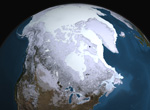
Permafrost threatened by rapid retreat of Arctic sea ice  Climate warming in Arctic countries could triple with rapid sea ice loss, raising concerns about thawing of permafrost, and consequences for ecosystems, infrastructure and methane release. See more

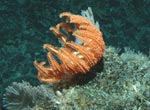
Explorers marvel at thriving brittlestar colony on a Macquarie Ridge seamount  A rare brittlestar colony covering 100 sq.km has been found in a fast moving ocean current on a subantarctic Macquarie Ridge seamount. See more

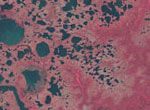
Earth impacts linked to human-caused climate change  A wide range of Earth's natural systems are impacted.  Siberian lakes disappear over 25 years, as permafrost thaws and water drains deeper into the ground. See more

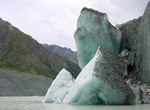
Tasman Glacier retreat is extreme  The Tasman Glacier is retreating faster than ever and will ultimately disappear.  There was no lake in front of it in 1973, but ice melt has now formed one 7km long and 2km wide. See more

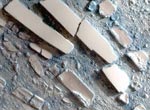
Antarctic ice shelf disintegration Nearly 14,000 sq.km of the Wilkins Ice Shelf on the Antarctic Peninsula has begun to collapse. This latest ice shelf collapse shows that global warming is changing Antarctic ice faster than predicted. See more

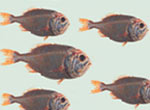
No environmental consideration of bottom trawling in orange roughy allowable catch decision  Uncontrolled bottom trawling in the EEZ contradicts New Zealand's position at the United Nations, and interim measures by the South Pacific RFMO. See more

Orange roughy commercial catch reduced to an all time low  New Zealand has reduced the 2007-08 total allowable commercial orange roughy catch in the EEZ by 11 percent, reaching its lowest level of 13,082 tonnes.  See more

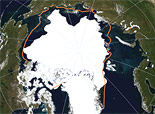
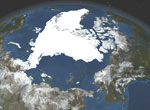
Melting Arctic summer sea ice reaches lowest level  The 2007 Arctic summer ice has reached the lowest extent of perennial ice cover on record - nearly 25 percent less than the previous low set in 2005.  See more

Agreement to restrict South Pacific high seas bottom trawling - is it enough?

The incredible journey of sooty shearwater from New Zealand to the north Pacific...

UN stark predictions of impact of climate change

Global companies, states and city government react to climate change

Scientists find lakes and rivers beneath fast moving Antarctic ice that lubricate flow

Extremely rare gecko reappears in Coromandel home garden

Status of six birds improve and ten worsen in the latest New Zealand threatened species list

Threatened status of two NZ native birds worsens in 2006 global listing

Climate change reduces ocean food supply, threatening marine ecosystems


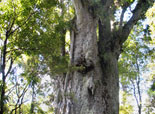
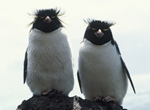
Photo Credit: -  Upper left, tusked weta, Crown Copyright © Department of Conservation (DoC) - Upper right, (1) Cathedral Cove, Coromandel Marine Reserve, Crown Copyright © DoC; (2) Kakapo and chick, Crown Copyright © DoC; (3) Nelson green gecko, Rod Morris Crown Copyright © DoC; (4) Upland moa, Copyright © Peter Schouten; (5) Erect-crested penguin, Antipodes Islands, Copyright © Tui de Roy - Right bottom, Phytoplankton, NASA - Right 2nd up, Australasian bittern, Copyright © Peter Fuller; - Right 3rd up, Codfish Island fernbird, Rosalind Cole, Crown Copyright © DoC; Right 4th up, Coromandel striped gecko, Crown Copyright © DoC - Right 5th up, Antarctic ice, NASA - Right 6th up, Simpson Desert fire scars, NASA - Right 7th up, kelp Auckland Islands, Rod Morris Crown Copyright © DoC - Right 8th up, Sooty shearwater, Copyright © Andrew Crosland - Right 9th up, coral, NOAA - Center top, Hudson Bay bog, Lee Klinger, Copyright © University Corporation for Atmospheric Research - Center 2nd down, seastar Macquarie Ridge, Copyright © NIWA - Center 3rd down, Siberian Lakes, NASA - Right 4th down, Tasman Lake, Copyright © Jeffrey de Grijs - Center 5th down, Wilkins Ice Shelf, NSIDC/Courtesy of Cheng-Chien Liu/NSPO - Center 6th down, coral, Ministry of Fisheries - Center 6th down, Arctic summer sea ice, NASA

Copyright © 2003-2008 TerraNature Trust. All rights reserved.

home | sponsors | latest news & events | join - donate | contact information | projects
volunteer activities | about us | site map | environmental issues | New Zealand ecology